
Contact Center
+84 903419479
Contact Center
+84 903419479
Dispute 19/09/2026
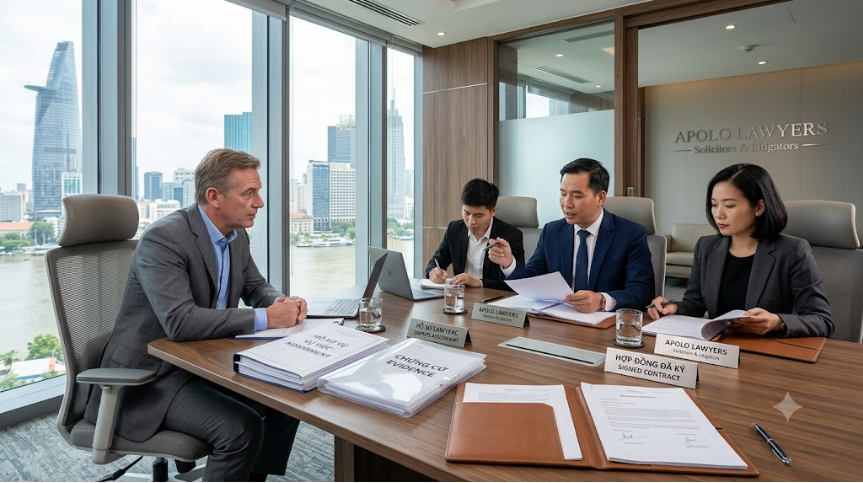 Many disputes begin with a delayed payment, a rejected delivery, a disagreement over quality, a shareholder conflict or a notice alleging breach of contract. At the early stage, parties may still believe the issue can be solved commercially. However, this is also the stage when evidence should be secured.
Evidence preparation matters because a dispute case is built on provable facts. A strong commercial position can be weakened if the supporting documents are incomplete, inconsistent or difficult to verify. For example, a foreign supplier may believe that goods were delivered properly, but the delivery notes, warehouse confirmations, inspection records and payment correspondence may not clearly show acceptance by the Vietnamese buyer.
Early preparation also helps lawyers assess realistic options. The appropriate strategy depends on the contract, governing law, jurisdiction clause, arbitration clause, facts and available evidence. A matter suitable for negotiation may require a different approach from a case intended for litigation or commercial arbitration in Vietnam.
Foreign clients should also consider timing. If evidence is collected too late, employees may leave, email accounts may be closed, chat histories may be deleted and original documents may become harder to locate. Proper litigation preparation in Vietnam requires both legal review and practical document control before the dispute escalates.
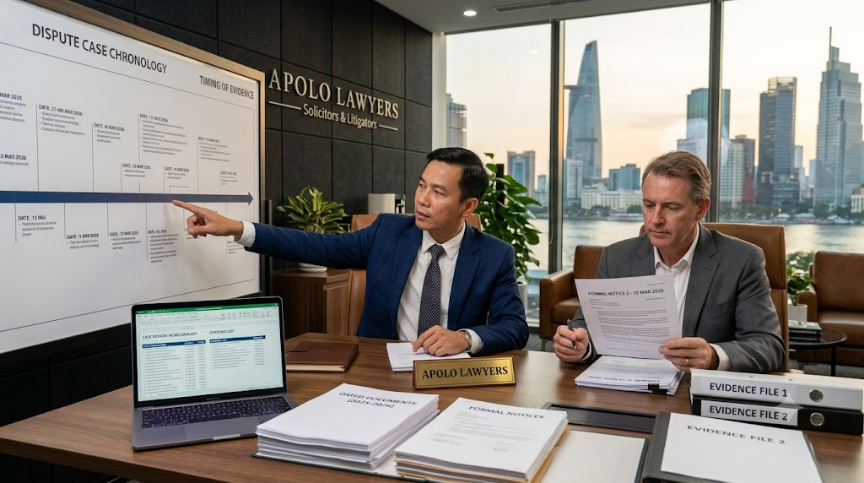 Evidence should be collected in a structured way, not as a random folder of files. Foreign clients should start by identifying the business relationship, the relevant contract, the disputed obligations and the timeline of events.
Key evidence may include:
For contract dispute in Vietnam matters, the original agreement and its full amendment history are particularly important. Foreign clients should avoid relying only on the final signed PDF if earlier drafts, negotiation emails or side agreements may affect interpretation.
It is also useful to prepare a document index. Each document should be labeled by date, sender, recipient, document type, language, source and relevance. This helps lawyers review the case efficiently and reduces the risk of important evidence being overlooked.
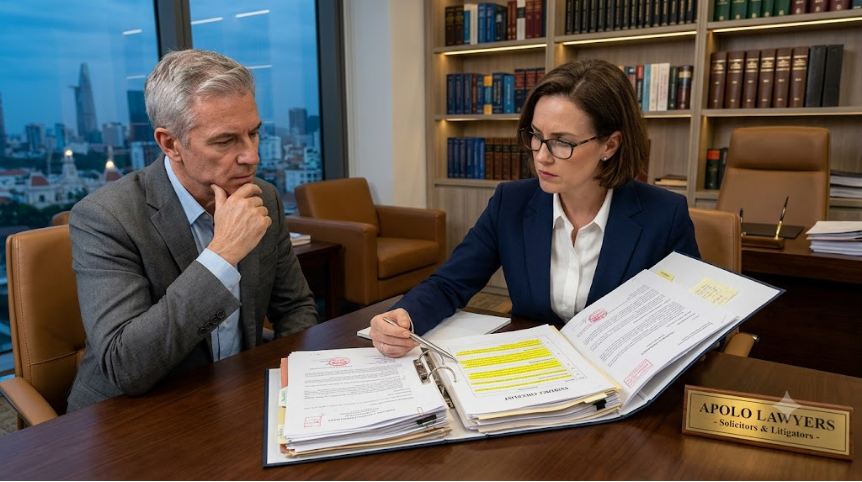 Foreign clients often face avoidable evidence problems in Vietnam disputes. One common mistake is treating business communication as informal and therefore unimportant. In practice, emails, chat logs and meeting confirmations may become important evidence of agreement, objection, waiver, delay or notice.
Another mistake is collecting evidence only from senior management. Important records may be held by sales staff, project managers, accountants, warehouse employees, local representatives or former employees. A narrow collection process may miss the documents that explain what actually happened.
Foreign clients should also be careful with document alteration. Editing, renaming or selectively exporting files without preserving originals may create questions about authenticity. Where possible, original files, metadata, email headers and full conversation threads should be preserved.
Translation is another practical risk. A poor translation may change the meaning of a legal notice, payment term or technical requirement. If a dispute involves English, Vietnamese or another language, the translation process should be reviewed carefully. In some cases, notarized or certified translations may be needed before documents are used formally.
Foreign clients should also avoid sending aggressive legal threats before understanding the evidence. A premature notice may narrow the client’s position or trigger a counterclaim. Before sending formal correspondence, it is advisable to review the broader strategy and consider whether the matter relates to litigation strategy before the dispute.
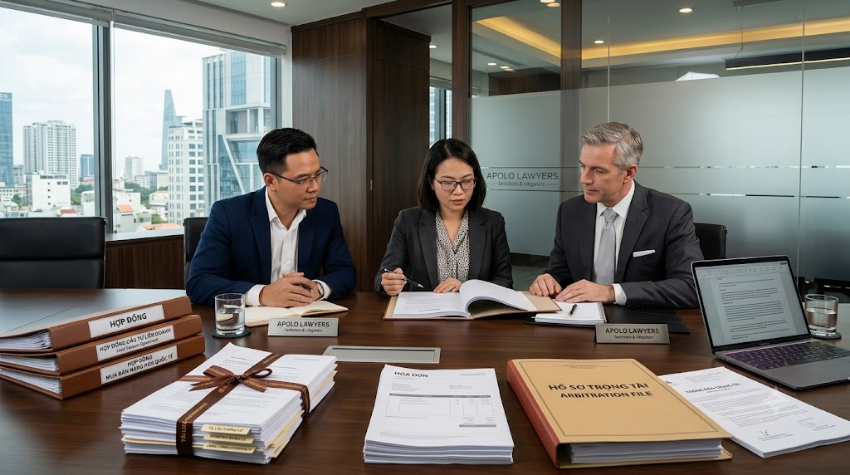 Evidence preparation should match the type of dispute. In a contract dispute, the key question may be whether a party performed its obligations, whether breach occurred and whether loss can be proven. In a commercial dispute in Vietnam, the evidence may involve broader business records, invoices, delivery history, debt confirmations, accounting records or conduct between the parties.
For foreign clients dealing with Vietnamese partners, disputes often arise from unclear contract terms, inconsistent bilingual documents, unsigned amendments, payment delays, product quality complaints or disagreement over termination rights. Where the dispute concerns a foreign partner or cross-border transaction, clients may also need to review practical issues discussed in resolving contract disputes with foreign partners in Vietnam.
Arbitration evidence in Vietnam may require careful preparation because arbitration is usually document-driven. Parties should prepare clear bundles showing the contractual basis, breach, correspondence, damages and procedural compliance. If the arbitration clause requires a specific institution, language or pre-arbitration negotiation step, evidence of compliance with those requirements may be important.
For court litigation, foreign clients should consider whether documents need to be translated, notarized, certified or legalized depending on their origin and intended use. If documents were signed overseas or issued by foreign authorities, additional formalities may be required. These issues should be checked before filing, not after the case is already underway.
 Experienced dispute lawyers in Vietnam can help foreign clients turn business documents into a legally useful evidence record. The lawyer’s role is not simply to receive documents at the end of the process. Early legal review can identify missing evidence, weak points, inconsistent records and documents that may require translation, certification or further explanation.
Vietnamese lawyers can assist by:
Foreign clients may also need guidance on the available procedural path. A dispute may be handled through negotiation, mediation, court litigation or arbitration depending on the contract and facts. For a broader understanding of available routes, clients may review forms of dispute resolution in business, but evidence preparation should still be tailored to the specific case.
Working with dispute resolution lawyers in Vietnam can also help foreign clients avoid presenting evidence in a way that is commercially persuasive but legally incomplete. A document may support the client’s business view but still fail to prove authority, breach, notice, causation or loss unless it is properly connected to the legal issues.
 Foreign clients should seek legal advice when a dispute becomes reasonably foreseeable, not only when formal proceedings have started. Warning signs may include repeated non-payment, refusal to accept goods or services, allegations of breach, termination threats, shareholder deadlock, refusal to provide documents or a sudden change in communication tone.
Early advice is especially important when:
A lawyer can help the client decide whether to continue negotiation, prepare for court litigation, initiate arbitration or preserve leverage while avoiding unnecessary escalation. Legal advice at this stage should be practical and evidence-based, not limited to abstract legal theory.
Evidence preparation for disputes in Vietnam is not a clerical task. It is a strategic step that affects negotiation strength, litigation preparation in Vietnam and arbitration evidence in Vietnam. For foreign companies, investors, expats and overseas clients, the most important work often begins before a formal claim is filed.
A well-prepared evidence record helps clarify the facts, assess legal options, avoid procedural mistakes and support a more realistic dispute strategy. Contracts, invoices, payment records, delivery documents, emails, chat logs, meeting minutes, notices, corporate approvals, power of attorney documents, translations and certified documents should be collected and reviewed with care.
If your company or investment is facing a potential dispute in Vietnam, you may contact Apolo Lawyers for a legal assessment before negotiation, litigation or arbitration. APOLO LAWYERS - Solicitors & Litigators can review the available evidence, identify legal risks and assist with a practical dispute strategy based on the facts of the case.
Address: 108 Tran Dinh Xu Street, Cau Ong Lanh Ward, Ho Chi Minh City, Vietnam
Tel: (+8428) 66.701.709 | (+84) 908.043.086
Email: contact@apolo.com.vn
Hotline: (+84) 903.600.347
Address: 9th/F, Tower K&M Building, 33 Ung Van Khiem St., Thanh My Tay Ward, HCM City, Vietnam
Tel: (+8428) 35.059.349 | (+84) 908.097.068
Email: contact@apolo.com.vn
Hotline: (+84) 979.48.98.79


