Contact Center
+84 903419479
Contact Center
+84 903419479
Investment 17/10/2026
Industrial site selection in Vietnam is not only a commercial or technical decision. For a foreign manufacturer, the legal position of the proposed land, factory or industrial premises can directly affect whether the project can proceed as intended.
A site may appear attractive because of its location, infrastructure, workforce access and rental terms, but those advantages do not eliminate legal risk. Problems may arise if the rights of the lessor are unclear, the permitted use of the property does not align with the proposed manufacturing activities, required approvals are incomplete or the lease places excessive obligations on the investor.
Legal due diligence should therefore ideally take place before a substantial deposit is paid, a long term lease is signed or the investor makes a final project commitment.
The central question is practical: can this particular industrial site legally and contractually support the intended operations of the manufacturer in Vietnam?
.jpg) Foreign manufacturers commonly assess an industrial site from commercial and technical perspectives before making a decision. Legal due diligence serves a different purpose.
Foreign manufacturers commonly assess an industrial site from commercial and technical perspectives before making a decision. Legal due diligence serves a different purpose.
A commercial assessment looks at rent, location, logistics, workforce availability and operating costs. A technical assessment may consider building conditions, power supply, drainage, access, production layout and infrastructure capacity. Legal due diligence examines whether the party offering the property has sufficient rights, whether the site can support the proposed activities and whether the contractual structure exposes the investor to unacceptable risk.
These reviews should work together. A technically suitable factory may still create problems if the intended use is not legally compatible with the property or if the landlord cannot provide the rights promised under the lease.
Inadequate legal review may contribute to project delays, additional compliance costs, disputes with the landlord or developer, difficulties obtaining project related approvals or the need to relocate after significant investment has already been made. It may also affect deposits or advance payments depending on the terms agreed between the parties.
The purpose of industrial property due diligence in Vietnam is not to eliminate every possible commercial risk. It is to identify material legal issues early enough for the investor to decide whether to proceed, renegotiate or seek another site.
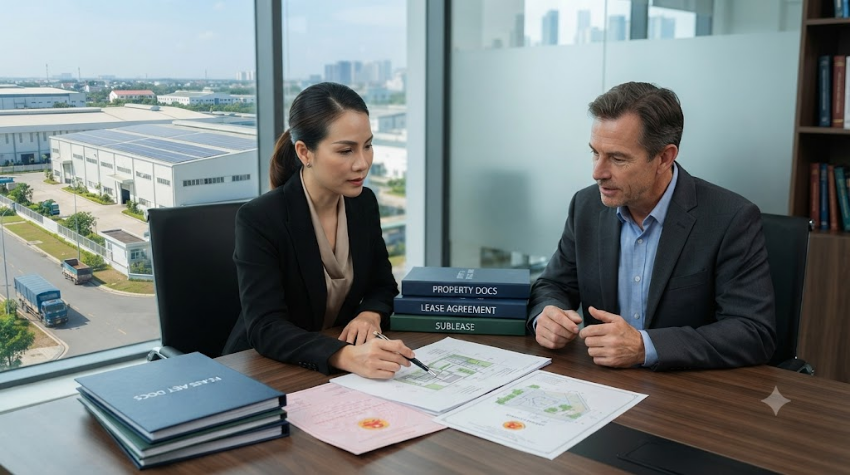 One of the first issues to review is whether the party offering the industrial property has sufficient authority to lease or sublease it.
The legal structure may differ depending on whether the investor is considering industrial park land, a completed factory, warehouse premises, a subleased property or another industrial arrangement. For this reason, the relevant documents should be reviewed in the context of the specific transaction rather than against one fixed checklist.
The review may involve land related rights of the lessor, project or development rights, authority to grant the proposed lease or sublease and the remaining duration of the underlying rights. Any restrictions affecting the intended use should also be examined.
The proposed lease term deserves particular attention. A foreign manufacturer should understand whether the term offered by the landlord is consistent with the duration of the underlying legal rights held by the landlord.
The willingness of the landlord to sign a contract does not, by itself, establish that the property can legally be leased on the proposed terms. This is why document review should take place before the investor relies on the site as part of its manufacturing plan.
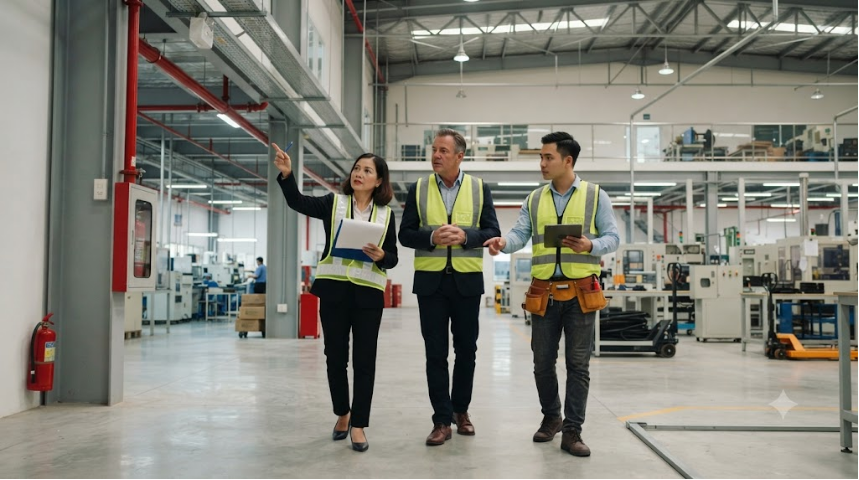 Industrial property is not interchangeable. A site suitable for one type of manufacturing activity may not necessarily be suitable for another.
Before committing to an industrial land lease in Vietnam, the investor should compare the proposed manufacturing project with the legal characteristics of the site. Depending on the circumstances, this may include reviewing approved land use, industrial park zoning, the nature of activities permitted at the location, project scale and any sector specific conditions that may affect the planned operations.
Environmental and infrastructure considerations may also influence suitability. Manufacturing processes involving wastewater, emissions, chemicals, high energy use or specialized treatment requirements can raise different issues from light assembly or packaging operations.
For this reason, legal review should focus on the actual business activities of the investor rather than relying on a broad description such as "industrial use."
Site suitability may also connect with the wider licensing structure of the investor. Businesses that need broader market entry guidance may separately review foreign investment in Vietnam or establishing a foreign invested enterprise in Vietnam.
However, for the industrial lease decision itself, the main issue remains whether the selected property is compatible with the project that the investor intends to operate.
Foreign manufacturers should not assume that an existing factory is automatically suitable simply because it has already been occupied or used for industrial activities.
The legal status of the building should be reviewed in light of the proposed project. Depending on the premises, this may involve construction related approvals, completion or acceptance documentation where applicable, the permitted use of the building and any significant modifications made after the original construction.
Fire safety, utility infrastructure and environmental facilities may also be relevant depending on the nature of the property and the planned operations.
Existing alterations deserve careful attention. A building may have been expanded or modified by a previous tenant, and those changes may affect whether the premises can be used as expected.
The foreign manufacturer should also consider what it plans to do after handover. Production line installation, fit out works, structural modifications or new utility systems may require landlord cooperation or additional approvals depending on the circumstances.
A factory lease legal review in Vietnam should therefore address both the present legal condition of the property and the proposed use after the investor takes possession.
.jpg) Manufacturing projects can involve environmental and operational obligations that vary significantly depending on the sector, location, scale and production process.
Manufacturing projects can involve environmental and operational obligations that vary significantly depending on the sector, location, scale and production process.
The investor should understand how these obligations are divided between the industrial park developer or landlord and the tenant. Existing wastewater treatment, waste handling systems, emissions controls, utilities and other infrastructure may support part of the project, but they should not automatically be assumed to satisfy all requirements of the proposed operations.
The legal review should therefore consider whether the available infrastructure is suitable for the planned activities and whether additional approvals or facilities may be necessary.
It is also important to reflect the allocation of responsibilities in the lease where appropriate. If the investor depends on the developer for infrastructure services, environmental systems or project related documents, the agreement should make the relevant obligations sufficiently clear.
Environmental and operational compliance should be reviewed case by case rather than treated as a universal checklist applying to every manufacturing project.
The Vietnam industrial lease agreement is one of the most important documents in the transaction because it defines the rights and obligations of the investor after the site has been selected.
The agreement should clearly describe the leased area, lease term, rent, service charges, payment schedule and handover conditions. Where relevant, it should also address infrastructure fees, utilities, fit out rights, construction works, permitted use and cooperation by the landlord with project or licensing procedures.
Foreign investors should pay particular attention to deposit provisions and termination rights. The agreement should make clear what happens if either party fails to perform, whether compensation may apply and whether the investor faces relocation or early termination risks.
Other provisions such as force majeure, dispute resolution, governing law and bilingual language versions can also be important. Where Vietnamese and English versions are used, any inconsistency between them should be identified before signing.
Lease review should not take place separately from property due diligence. A broad contractual right to use the premises for manufacturing will provide limited comfort if the underlying property cannot legally support the intended activity.
A lawyer for a factory lease in Vietnam can help connect the wording of the agreement with the actual legal position of the site and the project requirements of the investor.
 Deposit arrangements are often a critical stage in industrial property transactions.
A foreign manufacturer may be asked to pay a reservation fee, security deposit, advance rent or infrastructure fee before the full due diligence process has been completed. Once a substantial payment has been made, the negotiating position of the investor may change significantly.
Before transferring funds, the investor should understand which legal issues have already been verified, which matters remain outstanding and what happens if the property later proves unsuitable for the intended project.
Where commercially appropriate, the transaction may provide for conditions precedent, document delivery requirements or refund protections linked to important due diligence findings.
These protections will depend on the bargaining position and structure of the transaction. Legal review cannot guarantee that a deposit will always be refundable, but it can help the investor understand the legal consequences before making the payment.
Before signing an industrial lease, a foreign investor should be comfortable with several core questions.
First, the investor should understand whether the lessor has sufficient legal rights to offer the property and whether the proposed lease term fits within those rights.
Second, the site should be assessed against the actual manufacturing activities. This includes considering whether the intended use, project scale and relevant operational requirements are compatible with the location.
Third, the legal status of existing buildings and facilities should be reviewed, particularly where modifications, fit out works or additional infrastructure will be required.
The investor should also understand the environmental and operational responsibilities that will remain with the tenant and those that are expected to be handled by the developer or landlord.
Finally, the commercial terms of the lease should be reviewed together with their investment and licensing implications. A lease should not be treated as separate from the broader project if the ability of the investor to use the property depends on regulatory conditions or cooperation by the landlord.
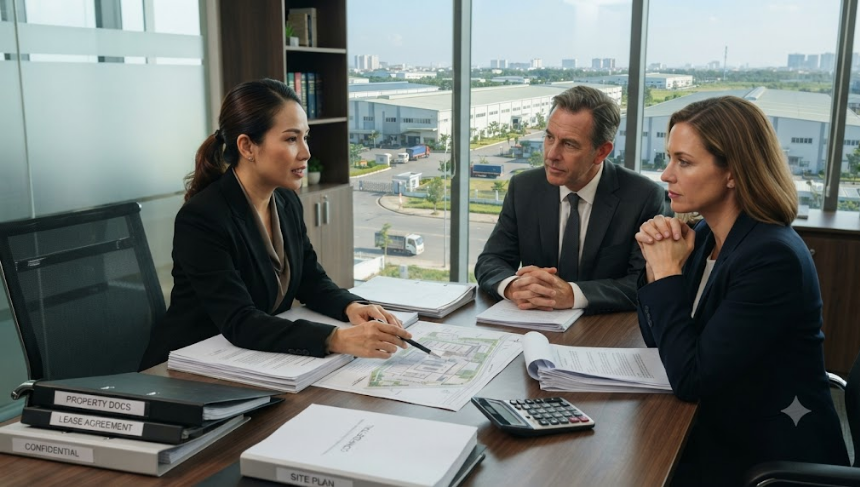 Jurion & Partners advises foreign manufacturers and investors on legal risks connected with industrial property and factory projects in Vietnam.
Our work may include reviewing industrial land, factory or warehouse documentation, checking lease and sublease rights and assessing whether a proposed property is legally suitable for the intended project.
We may also assist with industrial lease agreement review, deposit and payment risk, contractual protections and coordination of due diligence documents with landlords or developers.
Where required, Jurion & Partners can also support related investment and corporate procedures that connect directly with the proposed manufacturing project.
The appropriate scope of due diligence will depend on the property structure, industrial location and intended activities. The objective is to help the investor identify material legal issues before making a substantial financial or contractual commitment.
Foreign manufacturers considering an industrial site in Vietnam should conduct legal due diligence before paying a substantial deposit or signing a long term lease. Jurion & Partners can assist with property document review, lease analysis and project related legal risk assessment. To discuss a proposed industrial site, contact Jurion & Partners.
Address: 108 Tran Dinh Xu Street, Cau Ong Lanh Ward, Ho Chi Minh City, Vietnam
Tel: (+8428) 66.701.709 | (+84) 908.043.086
Email: contact@apolo.com.vn
Hotline: (+84) 903.600.347
Address: 9th/F, Tower K&M Building, 33 Ung Van Khiem St., Thanh My Tay Ward, HCM City, Vietnam
Tel: (+8428) 35.059.349 | (+84) 908.097.068
Email: contact@apolo.com.vn
Hotline: (+84) 979.48.98.79