Contact Center
+84 903419479
Contact Center
+84 903419479
Divorce 21/09/2026
Many foreign divorce cases in Vietnam are delayed before the court even considers whether the spouses agree to divorce, how child custody should be arranged, or how property should be divided. The first issue is often more basic: the marriage certificate was issued outside Vietnam and the court needs to decide whether it can be used as valid evidence of the marriage.
For foreigners, expats, overseas Vietnamese, and mixed nationality couples, this document issue can become a practical filing risk. A foreign marriage certificate may be in another language, may not be legalized, may not be translated into Vietnamese, may contain names that do not exactly match passports, or may not clearly show the issuing authority. In some cases, one spouse keeps the original and refuses to provide it.
Before filing for divorce in Vietnam with a foreign marriage certificate, clients should have the document reviewed carefully. The question is not only whether the spouses are legally married, but whether the Vietnamese court can rely on the document in the form submitted.
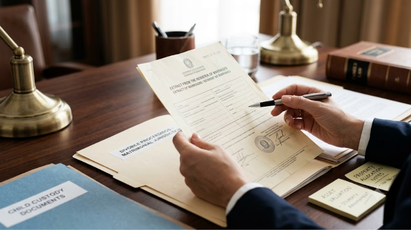
A Vietnamese court needs evidence of a valid marriage before it can resolve the divorce. Without a usable marriage certificate or acceptable supporting evidence, the court may not be able to proceed with issues such as divorce status, child custody, child support, visitation, marital property, debts, or other family matters.
For foreign clients, this means the marriage certificate is not just a background document. It is often the foundation of the divorce file. If the document is incomplete, unclear, untranslated, not properly certified, or issued by a foreign authority in a form the court cannot verify, the filing may be delayed or additional documents may be requested.
This is why using an overseas marriage certificate in Vietnam divorce proceedings should be checked before the petition is filed. A legally valid marriage abroad does not automatically mean every copy of the certificate will be accepted in court in Vietnam. The court usually needs a document that can be reviewed under Vietnamese procedural standards.
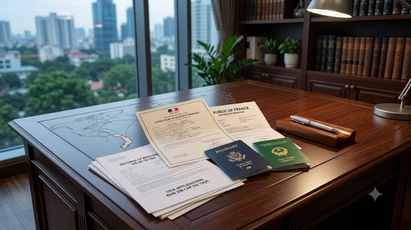
A foreign marriage certificate may be relevant in several divorce situations connected to Vietnam.
One common situation is where two foreigners married outside Vietnam but are now living in Vietnam. They may wish to file locally because their current residence, work, family life, or child arrangements are in Vietnam. In these cases, the foreign marriage certificate is usually one of the first documents reviewed, but jurisdiction must still be considered separately. Clients should not assume that living in Vietnam alone means the court will automatically accept the divorce case.
Another situation is where a foreigner married a Vietnamese citizen overseas. The spouses may later live in Vietnam, separate in Vietnam, or have children and property connected to Vietnam. The court may need to review the overseas marriage certificate together with identity documents, residence evidence, and other civil status records.
A foreign marriage certificate may also be used where the marriage was registered abroad but one spouse now lives in Vietnam. If the other spouse remains overseas, the case may involve additional filing, service, and evidence issues.
Where the parties have children or assets connected to Vietnam, the marriage certificate becomes even more important because it helps establish the legal relationship before the court reviews parental rights, support obligations, property claims, and related family matters.
In all of these situations, the use of a foreign marriage certificate Vietnam divorce file should be assessed together with the jurisdiction of the court to settle divorce involving foreign elements. Document preparation and court jurisdiction are related, but they are not the same issue.
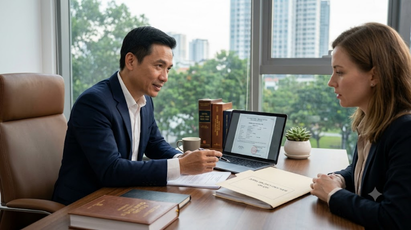
A foreign marriage certificate is commonly issued in a language other than Vietnamese. For use in a Vietnamese court, the document will usually need a Vietnamese translation. Depending on the case, the translation may need to be notarized or certified so the court can rely on it as part of the divorce dossier.
Consular legalization for divorce in Vietnam may also be required. In simple terms, legalization helps confirm that the foreign document was issued or certified by a competent authority in the issuing country. However, the exact requirement depends on the issuing country, the document type, the form of the certificate, and whether any treaty, bilateral arrangement, or legal exemption applies.
Foreign clients should be careful with general advice found online. A document that was accepted in one case may not be accepted in another case if it was issued by a different country, prepared in a different form, or submitted to a different court in different circumstances.
A translated marriage certificate for Vietnam court filing should normally be clear, complete, and consistent with the original. If the certificate contains stamps, registry notes, amendments, name changes, or foreign language annotations, those parts may also need to be translated. Partial translations can create unnecessary questions.
The safest approach is to review the original document, the issuing country, the current location of the client, and the intended court filing route before arranging translation or legalization. This avoids spending time and cost on a format that may still need to be corrected later.
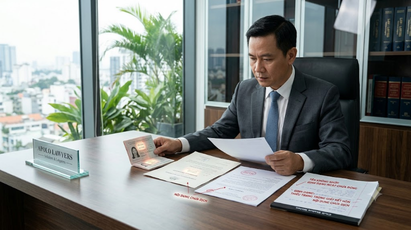
A missing original marriage certificate can create a serious filing issue, but it does not always mean the case is impossible. The correct solution depends on why the original is unavailable and what replacement documents can be obtained.
In some cases, the client may be able to request a reissued certified copy from the foreign registry office or authority that recorded the marriage. In other cases, an official extract from the marriage registry may be available. The court may need to review whether the reissued copy or extract clearly confirms the marriage and whether it has been properly certified, translated, and legalized where required.
If the client only has a scanned copy, photocopy, photo, or incomplete copy, the risk is higher. The court may ask for the original, a certified copy, or additional evidence proving the marriage. Filing with unclear or incomplete copies can delay acceptance of the case and may cause repeated requests for supplementation.
Where one spouse refuses to provide the original certificate, the filing spouse should discuss practical options with a lawyer before submitting the file. Depending on the country of registration and available records, it may be possible to obtain official confirmation independently. However, this should be checked case by case.

Foreign marriage certificates often create practical problems because their format and content may differ from Vietnamese court expectations. Common issues include names written differently from passports, missing middle names, changed surnames after marriage, or different spelling caused by transliteration.
Date formats can also create confusion. A document may use month day year, day month year, or a local calendar format. If the translation is not careful, the marriage date may appear inconsistent with other documents.
Other problems include unclear issuing authority, damaged or incomplete pages, faded stamps, missing registry numbers, documents issued only as extracts, certificates not legalized, or documents not translated into Vietnamese. In some cases, the marriage certificate does not match civil status records, prior name change documents, residence papers, or the information stated in the divorce petition.
Another common issue is that one spouse keeps the original marriage certificate and refuses to cooperate. This is especially problematic in unilateral divorce cases, where the other spouse may be abroad, unresponsive, or deliberately delaying the process.
These problems should be identified early. A lawyer can help determine whether the issue is a simple formatting matter, a translation issue, a legalization issue, or a more serious evidence problem.

A consensual divorce still requires valid documents. Even if both spouses agree to end the marriage, the court must still verify the legal basis of the marriage and review whether the divorce request and related agreements are lawful. If the foreign marriage certificate is not properly prepared, the case may be delayed despite full agreement between the spouses.
For consensual cases, document preparation is often the key to efficiency. The spouses may agree on divorce, child custody, support, and property, but the court cannot simply rely on informal statements if the core civil status document is not usable.
In unilateral divorce, the issue can be more complicated. One spouse may be abroad, may refuse to sign documents, may not provide the original certificate, or may dispute the marriage information. If the filing spouse cannot present a proper marriage certificate or acceptable replacement evidence, the court may need more time to review the file.
Foreign clients preparing a unilateral divorce with a foreigner should pay special attention to document control. The more uncooperative the other spouse is, the more important it becomes to prepare a complete and legally usable filing file from the beginning.
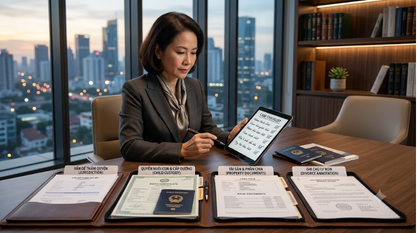
The marriage certificate is only one part of a divorce case involving foreign elements in Vietnam. After the document is reviewed, foreign clients should also check whether the Vietnamese court has jurisdiction, whether the filing route should be consensual or unilateral, and whether the parties’ residence and identity documents are sufficient.
For couples where both spouses are foreigners, the issue of two foreigners filing for divorce in Vietnam should be reviewed carefully before preparing the petition. A foreign marriage certificate may prove the marriage, but it does not by itself answer whether the case can be handled in Vietnam.
Clients should also consider child custody, child support, property division, and any assets located outside Vietnam. These issues may require additional evidence beyond the marriage certificate.
If a divorce decision has already been issued abroad, the issue may not be filing a new divorce case in Vietnam, but recognition, civil status update, or divorce annotation under Vietnamese law. This distinction is important because the required documents and procedure may be different.
Foreign clients who need broader guidance can also review procedures for divorce with foreigners in Vietnam, but a document focused review remains important where the marriage certificate was issued overseas.
APOLO LAWYERS - Solicitors & Litigators supports foreign clients with practical review and preparation of divorce documents involving Vietnam. The first step is often to examine the foreign marriage certificate, identify the issuing country, review the document format, and check whether translation, notarization, certification, or consular legalization may be required.
Legal support may include reviewing whether the document can be used in its current form, advising on how to obtain a reissued certified copy or registry extract, checking consistency between the marriage certificate and passports, and identifying name, date, or civil status discrepancies before filing.
Apolo Lawyers may also assist with jurisdiction assessment, filing route selection, preparation of divorce petitions, supporting documents, authorization papers, and responses to court requests. Where the client is outside Vietnam, the legal team can advise on signing documents abroad, coordinating legalization, and communicating with the court through proper procedures.
For clients who need more than document review, APOLO LAWYERS - Solicitors & Litigators also provides legal services in Vietnam for foreigners, including family law, civil documents, dispute matters, and other legal issues connected to Vietnam.
Legal support does not guarantee court acceptance, a fixed timeline, or a specific outcome. Its value is in reducing avoidable filing risks, preparing documents correctly, and helping clients make informed decisions before starting the divorce process.
Address: 108 Tran Dinh Xu Street, Cau Ong Lanh Ward, Ho Chi Minh City, Vietnam
Tel: (+8428) 66.701.709 | (+84) 908.043.086
Email: contact@apolo.com.vn
Hotline: (+84) 903.600.347
Address: 9th/F, Tower K&M Building, 33 Ung Van Khiem St., Thanh My Tay Ward, HCM City, Vietnam
Tel: (+8428) 35.059.349 | (+84) 908.097.068
Email: contact@apolo.com.vn
Hotline: (+84) 979.48.98.79