
Paying a supplier and receiving no goods can leave a business facing financial losses, missed customer deadlines, and uncertainty about recovering its money. The situation becomes more difficult when the supplier is overseas and communication begins to slow down or stop.
If your Vietnamese supplier failed to deliver goods after payment, the appropriate response depends on the contract, the applicable law, and the evidence available. Foreign buyers should first establish what went wrong, preserve their records, and assess whether to pursue delivery, a refund, or formal legal proceedings.
1. What Should You Check When a Vietnamese Supplier Fails to Deliver?
 Start by confirming the supplier’s exact delivery obligation. A missed shipment date, a failure to hand goods to a carrier, and a delay after shipment may involve different responsibilities.
Review the contract, purchase order, and subsequent correspondence to identify:
-
The agreed delivery date and any conditions attached to it;
-
Whether payment was an advance, a deposit, or the full purchase price;
-
The delivery location and any agreed Incoterms rule;
-
Whether the buyer had to approve samples, specifications, or shipping instructions;
-
Any agreed extensions or changes to the order;
-
The supplier’s explanation for the delay.
Where the supplier claims that goods have already been shipped, request verifiable shipping documents and check their status with the relevant carrier or freight forwarder.
Also confirm the legal identity of the supplier. Compare the company named in the contract with the entity issuing invoices and the beneficiary receiving payment. If different entities are involved, the relationship between them needs to be clarified before making a claim.
The applicable legal framework also requires attention. Vietnam has been a contracting state to the United Nations Convention on Contracts for the International Sale of Goods (CISG) since January 1, 2017. Its application to a particular transaction depends on the Convention’s requirements and the parties’ agreement, including any valid exclusion.
2. What Evidence Should Foreign Buyers Prepare?
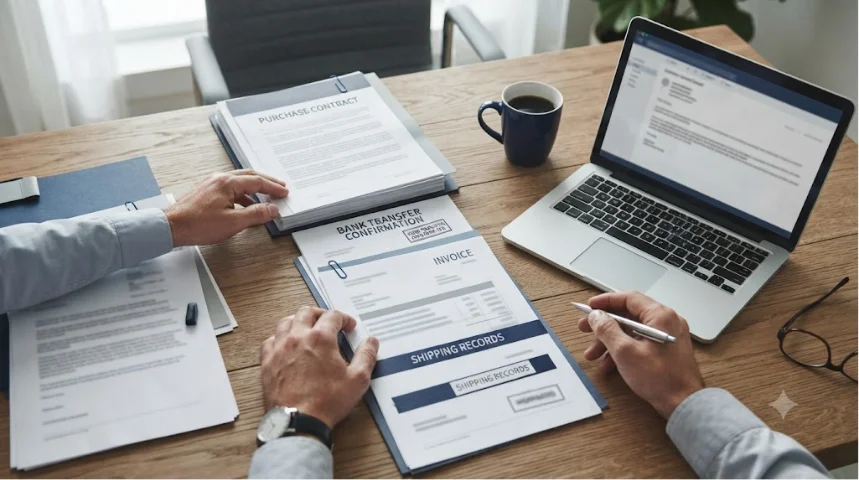 A payment confirmation is important, but it should be supported by documents explaining what the payment was for and when delivery was due.
Foreign buyers should collect:
-
Transaction documents: Signed contracts, purchase orders, quotations, pro forma invoices, and amendments;
-
Payment evidence: Bank transfer confirmations, account statements, and acknowledgments of receipt;
-
Delivery terms: Production schedules, shipment commitments, and agreed specifications;
-
Communications: Emails, messages, meeting records, and explanations for delayed delivery;
-
Performance records: Documents showing partial delivery, inspection results, or shipment status;
-
Loss records: Replacement purchase invoices and other documents supporting additional costs.
Keep original files and complete message histories where available. Screenshots can be useful, but retaining the underlying electronic records helps preserve context.
Prepare a short chronology showing the order date, payment date, delivery deadline, follow-up requests, and the supplier’s responses. Separately calculate the amount paid, the value of any goods received, and the outstanding amount.
This preparation helps distinguish established facts from matters that still require investigation.
3. How to Request Delivery or a Refund from the Supplier
 Once the relevant facts are clear, send a written demand identifying the contract, the payment made, the missed obligation, and the remedy requested.
If delivery remains commercially useful, the buyer may seek a firm completion date supported by production updates, inspection arrangements, or verifiable shipping milestones.
If the buyer wishes to recover payment, the legal basis for ending the transaction should be assessed first. A missed delivery date does not automatically establish an immediate right to cancel every contract.
For example, where the CISG applies, Article 49 permits avoidance for a fundamental breach or, in cases of nondelivery, following the supplier’s failure to deliver within an appropriate additional period fixed under Article 47. Avoidance also requires notice.
A demand letter should therefore reflect the applicable legal position and comply with relevant notice requirements. It should specify a response deadline and preserve evidence of dispatch and receipt.
If the supplier agrees to refund the payment, record the amount, currency, payment dates, bank charges, and consequences of default in a written settlement. Any release of claims should be carefully linked to the agreed performance.
4. Can Buyers Claim Interest, Penalties, or Damages?
 A foreign buyer may wish to recover more than the original payment, particularly where nondelivery has caused additional expenses. Each component of the claim requires a separate legal and evidentiary assessment.
Refund of the purchase price
The buyer should identify the basis for repayment, such as a valid cancellation or avoidance, an express refund provision, or a subsequent settlement. Partial deliveries and other benefits received must also be considered.
Damages
Where Vietnam’s Commercial Law governs the claim, damages generally require a breach, actual loss, and a direct causal connection. The claimant must prove its loss and take reasonable steps to limit it. Additional procurement costs or lost profit therefore require supporting evidence and legal assessment.
Contractual penalties
Review whether the contract contains an enforceable penalty clause and whether mandatory limits apply. A penalty should not be assumed merely because the supplier breached the agreement.
Interest
Interest requires assessment of the applicable legal basis, the amount on which it is calculated, the relevant rate, and the starting date. An advance payment awaiting delivery and an overdue refund obligation may raise different issues.
A clearly itemized calculation makes the claim easier to evaluate and negotiate.
5. Arbitration or Vietnamese Courts: Which Option Applies?
 If the supplier does not cooperate, formal proceedings may become necessary. The dispute resolution clause is the starting point.
Arbitration may be available where there is a valid and operative arbitration agreement covering the dispute. Review the designated institution, the scope of the clause, the seat, the language, and the applicable procedural rules. VIAC’s published rules address the tribunal’s assessment of the existence, validity, and operability of the arbitration agreement.
Court proceedings require an assessment of jurisdiction, the appropriate defendant, and the applicable filing and evidence requirements. A supplier’s location in Vietnam is relevant, but it does not alone resolve every jurisdictional question.
Before commencing either process, consider:
-
The amount realistically recoverable;
-
Filing fees, legal costs, and translation expenses;
-
Available evidence and potential defenses;
-
Applicable limitation periods;
-
The supplier’s financial position and identifiable assets;
-
The steps required to enforce an eventual judgment or award.
Negotiations should be managed alongside a review of filing deadlines. Repeated promises to deliver or repay should not replace a clear procedural strategy.
6. How Jurion & Partners Can Help Recover Your Payment
 Jurion & Partners can review the transaction, identify the appropriate party to pursue, and assess the legal basis for delivery, repayment, and any additional claims.
Depending on the circumstances, assistance may include preparing a formal demand, negotiating a settlement, reviewing termination notices, and representing the buyer in arbitration or court proceedings. The assessment should also address the supplier’s ability to pay and the practical prospects of enforcement.
Early review is particularly useful when the contract and payment records name different entities, the supplier repeatedly changes its explanation, or the buyer is considering purchasing replacement goods.
Has your Vietnamese supplier received payment but failed to deliver the goods? Contact Jurion & Partners to discuss your recovery options. Send the relevant contract or purchase order, payment confirmation, and key correspondence so that our legal team can review the transaction and advise on the appropriate next steps.


