Contact Center
+84 903419479
Contact Center
+84 903419479
Enterprise 08/10/2026
A branch of a foreign company in Vietnam can be a useful structure for a foreign trader that wants to conduct commercial activities in Vietnam without immediately incorporating a separate Vietnamese company. However, a branch is a licensed presence, not a simple registration formality.
Before preparing a dossier, the foreign company should review whether it is eligible, whether its proposed business line can be licensed, which authority will handle the application, and what compliance duties will apply after licensing.

A branch is a dependent unit of a foreign trader established in Vietnam under a branch establishment license. It is not a separate Vietnamese legal entity. Instead, it operates as an extension of the foreign parent company within the licensed scope.
A branch may conduct commercial activities in Vietnam if those activities are permitted under its license and Vietnamese law. This is different from a representative office, which is mainly used for liaison, market research and non-revenue-generating support activities.
A branch is also different from a foreign invested company. A foreign invested company is incorporated in Vietnam and normally follows investment registration and enterprise registration procedures.

A foreign company may consider a branch when it already has an established overseas business and wants a direct commercial presence in Vietnam.
This structure may be relevant where:
the foreign company is lawfully operating overseas;
the company wants a Vietnam presence without immediately setting up a local subsidiary;
the proposed activities are permitted for a branch;
the parent company wants direct operational control;
the business model does not require a separate Vietnamese company at the initial stage.
However, a branch is not always the best option. Depending on the business line, tax model, contracts, hiring plan and long-term strategy, another structure may be more suitable. Foreign businesses may first review foreign investment options in Vietnam before choosing a market entry structure.

Vietnamese law requires the foreign parent company to be legally established and operating under the law of its home jurisdiction. The company must usually show that it has operated for the required period before applying for a branch license in Vietnam.
The proposed branch activities must also be lawful and consistent with Vietnam’s commitments and domestic regulations. The licensing authority may review whether the business line can be conducted through a branch and whether any special conditions apply.
The parent company’s registration documents, business scope, constitutional documents and financial evidence should be consistent. If the parent company’s registration document has an expiry date, its remaining validity may affect the application.
Branch licensing is not automatic. Foreign companies should avoid assuming that every business line can be licensed through a branch.

A typical dossier for a foreign company branch in Vietnam may include:
application form for a branch establishment license;
parent company business registration certificate or equivalent document;
audited financial statement or equivalent proof of operation;
charter, articles of association or equivalent document;
appointment decision for the head of branch;
passport or identity documents of the head of branch;
documents relating to the proposed branch office address;
lease agreement or evidence of lawful use of the office;
other documents requested by the licensing authority.
Foreign-issued documents may need legalization or consular authentication, translation into Vietnamese, and notarization or certification. Requirements can vary by licensing authority and business sector, so the dossier should be checked before filing.

The setup process usually starts with a feasibility review. This helps confirm whether the foreign trader is eligible, whether the proposed activities are licensable, and whether the intended structure is appropriate.
A practical filing process may include:
Reviewing eligibility and business scope.
Preparing a tailored dossier checklist.
Legalizing or authenticating foreign documents.
Translating and notarizing documents.
Filing the dossier with the competent authority.
Responding to amendment requests, if any.
Receiving the license or refusal.
Completing post-licensing compliance steps.
In ordinary cases, the authority may process a valid dossier within the statutory timeline. However, timing can change if amendments, clarifications or sector-specific consultations are required. Foreign companies should verify the current processing time before planning commercial launch dates.
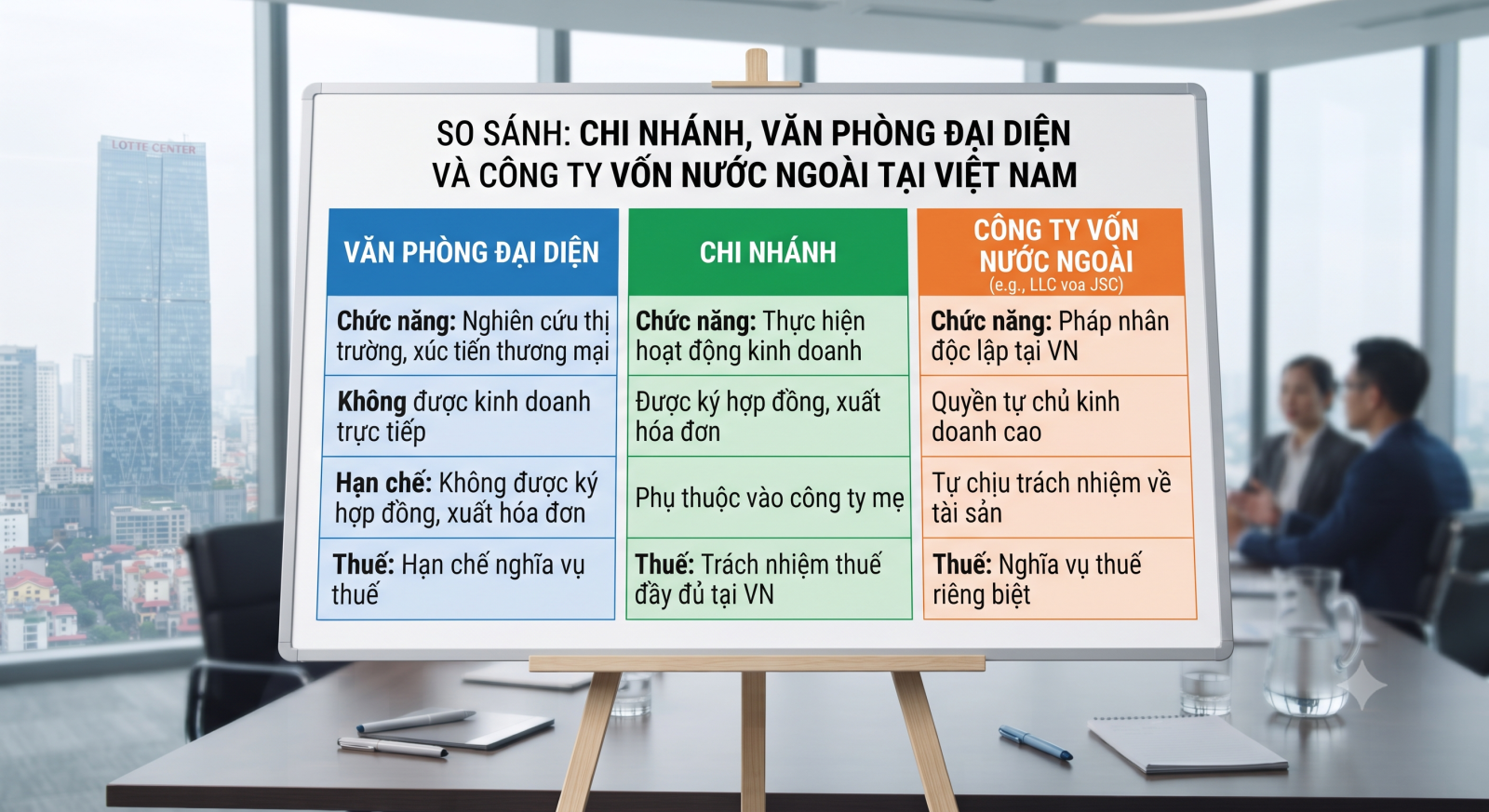
Common risks include choosing a branch when a foreign invested company would be more appropriate, defining the branch scope too broadly, or preparing documents that are not properly legalized or translated.
Foreign companies should also check key legal considerations when starting a business in Vietnam before committing to a structure.
Other frequent issues include:
inconsistent parent company information across documents;
office lease documents that are not acceptable for licensing;
appointing a head of branch without clear authority limits;
operating beyond the licensed branch scope;
failing to plan tax, labor, reporting and post-licensing compliance.
A branch license is only the beginning. The company should also prepare for continuing obligations after the branch is established.

APOLO LAWYERS - Solicitors & Litigators can support foreign companies with practical legal assessment and filing guidance for branch establishment in Vietnam.
Our support may include:
pre-filing legal assessment;
review of business line and licensing feasibility;
dossier checklist preparation;
guidance on legalization, translation and notarization;
review of branch office documents;
filing support and communication with the authority;
post-licensing compliance advice.
Early legal review can help foreign companies avoid unsuitable structure selection, document inconsistencies and unnecessary filing delays.

Foreign companies planning to open a branch in Vietnam should obtain legal advice before preparing the dossier, especially where the proposed business line is conditional, regulated or commercially sensitive.
Before preparing a branch establishment dossier, foreign companies should review licensing feasibility, business scope and post-licensing obligations with Vietnamese lawyers. To discuss whether a branch is the right structure for your Vietnam market entry plan, please contact Apolo Lawyers.
Address: 108 Tran Dinh Xu Street, Cau Ong Lanh Ward, Ho Chi Minh City, Vietnam
Tel: (+8428) 66.701.709 | (+84) 908.043.086
Email: contact@apolo.com.vn
Hotline: (+84) 903.600.347
Address: 9th/F, Tower K&M Building, 33 Ung Van Khiem St., Thanh My Tay Ward, HCM City, Vietnam
Tel: (+8428) 35.059.349 | (+84) 908.097.068
Email: contact@apolo.com.vn
Hotline: (+84) 979.48.98.79