Contact Center
+84 903419479
Contact Center
+84 903419479
Foreigners 08/09/2026
Foreign clients often need legal support in Vietnam while living overseas. A dispute may arise with a Vietnamese business partner. A contract may need to be enforced. A property, inheritance, corporate or court matter may require action before Vietnamese authorities. In many cases, travelling to Vietnam is inconvenient, costly or simply impossible within the required timeline.
A power of attorney in Vietnam for foreigners can help bridge this practical gap. By authorizing a Vietnamese lawyer or trusted representative, a foreign client may be able to handle certain legal steps in Vietnam without being physically present for every meeting, filing or procedural action.
However, a power of attorney is not a universal solution. It must be properly prepared, accepted for the specific matter, and used within its legal scope. Some actions may still require the client’s direct participation, original documents, notarization, consular legalization or further confirmation by Vietnamese authorities.
This article explains when foreign clients may need a power of attorney, what a Vietnamese lawyer can do under authorization, common matters handled remotely, key documents to prepare, and how APOLO LAWYERS - Solicitors & Litigators supports overseas clients dealing with legal issues in Vietnam.

A power of attorney is often considered when a foreign client has a legal matter in Vietnam but cannot personally attend meetings, sign documents, submit filings or work directly with local authorities.
Foreign clients may need authorization in Vietnam when they:
For overseas clients, the practical benefit is not only convenience. A properly structured authorization can help the lawyer act quickly, preserve procedural rights, communicate with relevant parties and avoid delays caused by distance, language barriers or unfamiliar local procedures.
In disputes, early authorization may be especially important. Delayed action can affect evidence collection, negotiation position, court deadlines or enforcement strategy. Foreign clients involved in commercial or civil disputes may also need to coordinate authorization with broader litigation planning. In such cases, working with experienced litigation lawyers in Vietnam for foreign clients can help determine whether representation by power of attorney is suitable for the case.

The scope of authority depends on the wording of the power of attorney, the nature of the legal matter and the requirements of the competent authority. A lawyer can only act within the authority granted by the client and accepted under Vietnamese practice.
Depending on the case, a Vietnamese lawyer may assist with:
In court-related matters, court representation by power of attorney in Vietnam must be assessed carefully. A lawyer may be authorized to participate in litigation procedures, submit documents, present arguments and protect the client’s lawful interests. However, the exact scope of representation may vary depending on whether the matter is civil, commercial, labor, family, administrative or enforcement-related.
The power of attorney should therefore be drafted with practical precision. It should identify who is authorized, what legal matter is covered, what actions may be taken, whether settlement authority is granted, and whether the lawyer may receive documents or appoint supporting personnel. Overly broad wording may create risk, while overly narrow wording may prevent the lawyer from acting effectively.
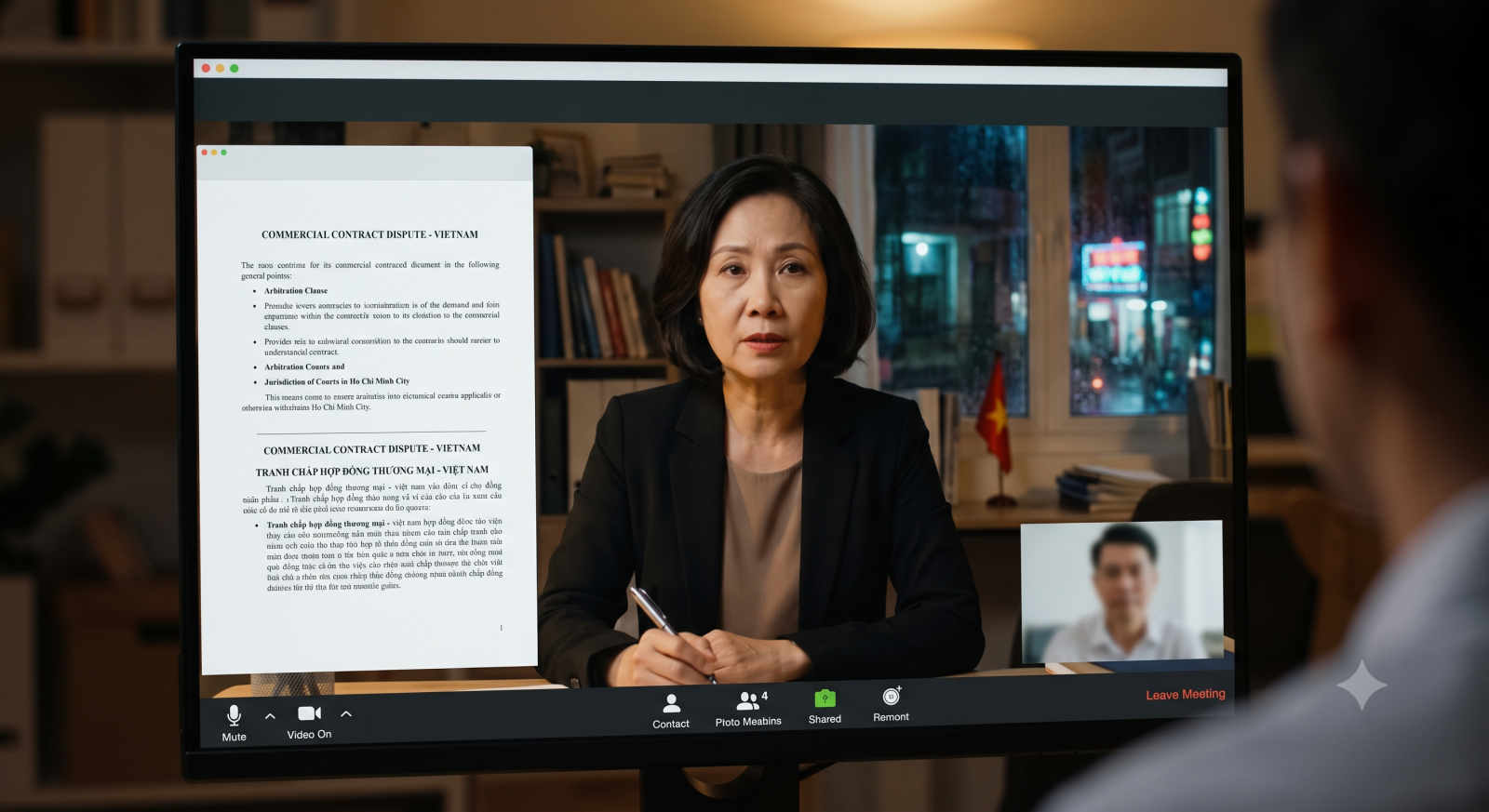
Many foreign clients contact Vietnamese lawyers because they want legal representation in Vietnam without travel. In practice, several types of matters may be reviewed, prepared or partially handled remotely, provided the documents and authorization are properly arranged.
Common matters include:
Not every matter can be fully completed remotely. Some situations may require original signatures, personal attendance, direct verification or additional documents. For example, where a client’s testimony, identity confirmation, settlement approval or personal declaration is required, the lawyer should explain this risk at the beginning rather than assume everything can be handled through authorization.
For disputes that may not immediately require court action, foreign clients should also consider negotiation, mediation or other dispute resolution strategies. A Vietnamese lawyer can help evaluate whether the matter should proceed through negotiation, formal demand letters, court litigation or another route. Foreign clients can learn more about the broader dispute pathway through dispute resolution lawyers in Vietnam.
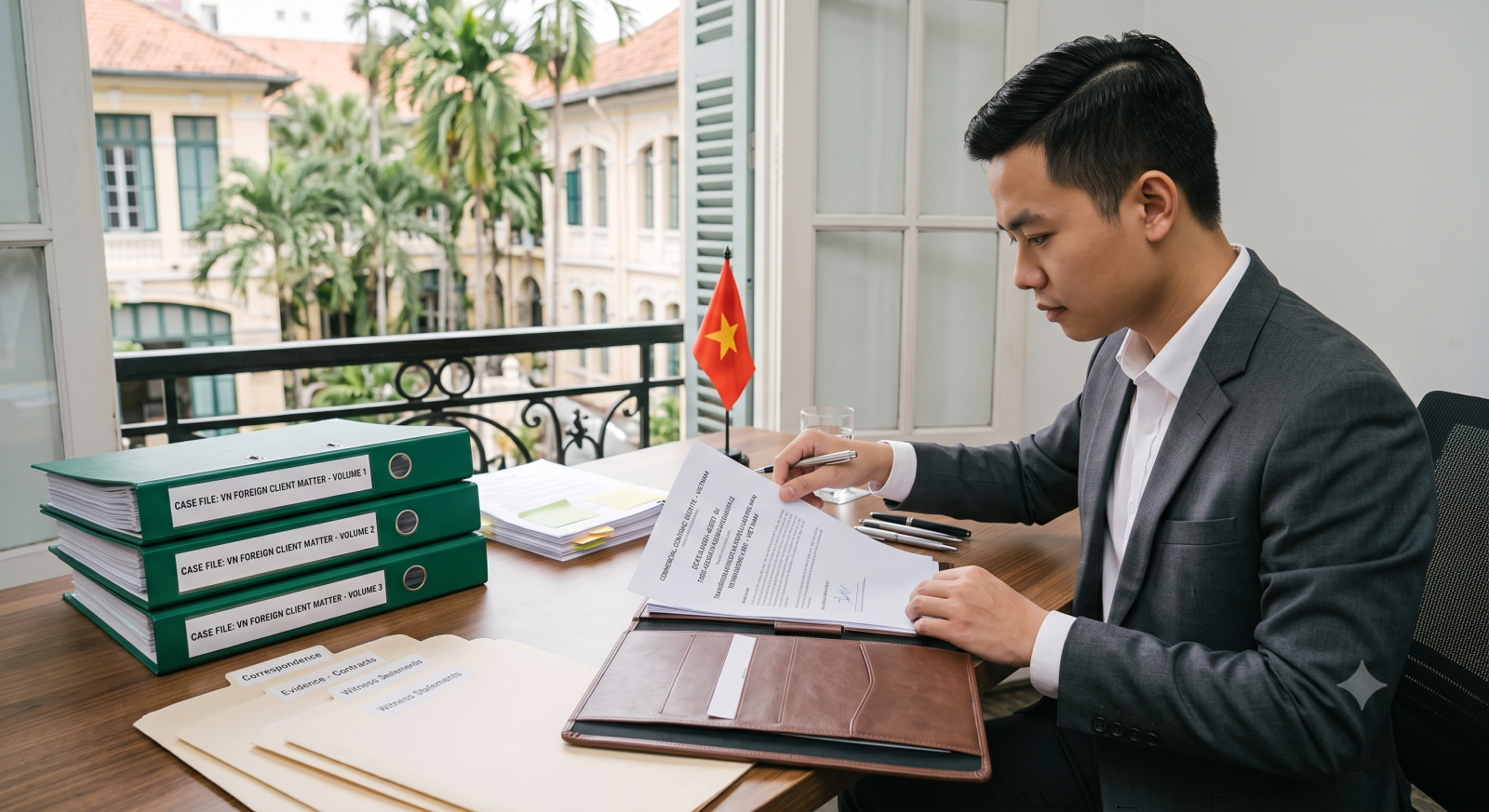
Before a Vietnamese lawyer can assess whether a power of attorney is suitable, the client should prepare the main documents related to the matter. The purpose is to understand the legal issue, identify the parties, check deadlines and determine what authority is needed.
Foreign clients should usually prepare:
If the client is a company, additional documents may be needed to show that the person signing the power of attorney has authority to act on behalf of the company. This may include a certificate of incorporation, business registration document, board resolution, director appointment document or equivalent corporate authorization.
Foreign-issued documents may require notarization, certification, consular legalization or Vietnamese translation depending on where they are signed and how they will be used in Vietnam. This should be reviewed case by case. The key point is to avoid preparing documents in a way that later becomes unusable before a court, authority or counterparty.
A practical first step is to send scanned copies for legal review before arranging formal signing. This helps the lawyer confirm whether the proposed authorization is sufficient and whether the client should prepare any supporting documents at the same time.

A power of attorney can be useful, but foreign clients should understand its limits before relying on it.
First, the power of attorney must match the actual legal task. If the authorization only allows document submission, the lawyer may not be able to negotiate settlement, receive payments or represent the client in a hearing. If the wording is too vague, an authority may request clarification or reject certain actions.
Second, not all legal matters can be completed entirely through a representative. Some procedures may require the client’s personal statement, original signature, direct confirmation or appearance. This is particularly important in sensitive matters involving personal status, family issues, criminal implications or authority-specific verification.
Third, foreign documents may face technical requirements. A document signed abroad may need notarization, consular legalization and Vietnamese translation. Requirements can vary depending on the country of signing, the type of document and the authority receiving it in Vietnam.
Fourth, settlement authority should be controlled carefully. A foreign client should not grant broad authority to compromise claims, waive rights, transfer assets or receive funds unless the scope, reporting process and approval mechanism are clear.
Fifth, timing matters. Preparing authorization after a deadline has already passed may limit the available legal options. Foreign clients should contact a lawyer early, especially when court deadlines, limitation periods, asset dissipation risks or urgent filings are involved.
A well-prepared power of attorney should therefore be part of a broader case strategy, not a standalone form. The lawyer should first understand the legal matter, identify the required steps, explain which actions can be handled remotely, and warn the client where personal participation may still be necessary.

APOLO LAWYERS - Solicitors & Litigators assists foreign clients, expats, overseas Vietnamese, investors and foreign companies with legal matters connected to Vietnam. For clients who cannot travel, the firm can review the case remotely and advise whether authorization is appropriate.
Our support may include:
Foreign clients often need more than a document template. They need a Vietnamese legal team that understands both local procedure and international client expectations. For broader legal support, foreign clients may also refer to law firm in Vietnam for foreign clients and investors.
If you are overseas and need to handle a legal matter in Vietnam, contact Apolo Lawyers to review your case, identify whether a power of attorney is suitable, and prepare the next legal steps in Vietnam.
Address: 108 Tran Dinh Xu Street, Cau Ong Lanh Ward, Ho Chi Minh City, Vietnam
Tel: (+8428) 66.701.709 | (+84) 908.043.086
Email: contact@apolo.com.vn
Hotline: (+84) 903.600.347
Address: 9th/F, Tower K&M Building, 33 Ung Van Khiem St., Thanh My Tay Ward, HCM City, Vietnam
Tel: (+8428) 35.059.349 | (+84) 908.097.068
Email: contact@apolo.com.vn
Hotline: (+84) 979.48.98.79