Contact Center
+84 903419479
Contact Center
+84 903419479
Enterprise 12/10/2026
Foreign clients often need legal support in Vietnam even when they are no longer living in the country or cannot travel back within a short period of time. A commercial dispute may arise after a contract has been signed. A company matter may require communication with Vietnamese authorities. A family, property, inheritance, labor, or investment issue may need urgent legal assessment before deadlines expire.
In many situations, a lawyer in Vietnam can assist an overseas client without requiring the client to be physically present for every step. However, remote legal representation must be handled carefully. It does not mean every case can be completed entirely online, and it does not remove the need for proper documents, valid authorization, notarization, legalization, translation, or original signatures where required.
This article explains when foreign clients may need legal representation in Vietnam, what documents are usually required, how the remote process works, and what risks should be considered before appointing a lawyer from overseas.

Foreign clients may need legal representation in Vietnam when a legal issue, transaction, dispute, or administrative procedure is connected to Vietnam but the client is currently outside the country. This can happen in both business and personal matters.
Common examples include:
a contract dispute with a Vietnamese company or individual;
unpaid invoices or debt recovery matters;
investment, shareholder, or company management issues;
employment and labor disputes involving a Vietnam-based employer or employee;
property, inheritance, or asset-related matters in Vietnam;
divorce or family matters with a Vietnam connection;
administrative procedures requiring documents, explanations, or legal submissions;
communication with authorities, counterparties, courts, or other relevant organizations.
For many overseas clients, the difficulty is not only legal knowledge but also distance, language, time zone differences, and unfamiliarity with Vietnamese procedures. A client may need someone in Vietnam to review documents, assess legal options, communicate with the other side, prepare submissions, or explain what can realistically be done.
Foreign clients who are still at the early stage of reviewing their options may also benefit from understanding broader legal services in Vietnam for foreigners before deciding the scope of representation.

In many cases, a lawyer in Vietnam can assist a foreign client remotely if the client provides the required documents, confirms the scope of work, and signs a valid authorization where necessary. The exact level of remote representation depends on the type of matter, the authority or institution involved, and the documents required under Vietnamese law and practice.
A lawyer may be able to assist remotely with tasks such as:
reviewing contracts, evidence, correspondence, and legal documents;
advising on legal strategy and possible courses of action;
preparing letters, notices, settlement proposals, or legal submissions;
communicating with counterparties or relevant organizations;
supporting negotiation or settlement discussions;
preparing documents for filing or further legal action;
representing the client within the permitted legal scope.
However, foreign clients should not assume that every procedure can be completed without any physical document or formal step. Some matters may require original signatures, notarized documents, consular legalization, certified translation, identity verification, or personal attendance if requested by a competent authority.
The key question is not simply whether the client can avoid traveling. The practical question is whether the matter can be handled properly through documents, authorization, and legally acceptable communication channels. A responsible lawyer should assess this before accepting a remote representation mandate.

The documents required will depend on the case. A commercial dispute will need different documents from a family, labor, property, or investment matter. However, foreign clients should usually prepare a clear document file before requesting legal representation in Vietnam.
Documents may include:
passport or identity documents of the foreign client;
company registration documents if the client is a company;
power of attorney or authorization letter;
contracts, agreements, invoices, receipts, or payment records;
email, chat, or written correspondence with the other party;
company, investment, employment, marriage, property, inheritance, or court papers where relevant;
evidence arranged by timeline;
previous notices, decisions, summonses, or official letters if any.
For documents issued outside Vietnam, legalization and certified translation may be required before they can be used in official procedures. This is especially important when the document is submitted to a Vietnamese court, authority, notary office, or other institution.
Foreign clients should avoid sending original documents overseas or to third parties without clear instructions. It is usually better to begin with scanned copies for initial review. The lawyer can then advise which originals are necessary, how they should be legalized or translated, and whether they must be submitted or only presented for verification.

Remote representation may be suitable for different types of matters, depending on the facts and procedural requirements.
Foreign clients may need help when a Vietnamese counterparty fails to perform a contract, delays payment, delivers defective goods or services, or refuses to settle a dispute. A lawyer can review the contract, assess dispute resolution clauses, prepare demand letters, support negotiation, and advise whether litigation or arbitration may be appropriate.
For more complex disputes, overseas clients may also need litigation lawyers in Vietnam for foreign clients to assess filing requirements, evidence, jurisdiction, and representation before Vietnamese courts.
Debt recovery matters often require careful communication before formal action. A lawyer may assist by reviewing the debt evidence, confirming the debtor’s identity, preparing legal notices, negotiating payment schedules, and advising whether legal action is commercially reasonable.
Foreign investors and business owners may need support with shareholder issues, company records, internal disputes, investment compliance, representative office matters, or business restructuring. In such cases, the lawyer may need to review company documents, charter provisions, resolutions, investment licenses, and correspondence among shareholders or managers.
Some foreign clients may have family matters connected to Vietnam, such as divorce, child-related issues, marital property, or recognition of foreign documents. These matters may require special attention to jurisdiction, personal status documents, legalization, translation, and court requirements. Remote support may be possible for certain steps, but some cases may still require formal authorization or personal appearance depending on the procedure.
Foreign clients may need legal support involving property documents, inheritance claims, family assets, or disputes over land-use rights and housing. These matters can be document-heavy and may require coordination with local authorities, notaries, relatives, or other parties in Vietnam.
Foreign employees, executives, or employers may need support with employment contracts, termination, unpaid salary, work-related disputes, or settlement negotiations. A lawyer can review the employment documents and advise on the practical steps available under Vietnamese labor law.
Some matters do not begin as disputes but still require legal assistance. These may include preparing explanations, reviewing official letters, supporting document collection, or communicating with relevant agencies. Remote assistance can be useful where the client needs someone in Vietnam to coordinate procedure and provide legal guidance.

Although each case is different, remote legal representation in Vietnam often follows a structured process.
The client provides a summary of the matter, key documents, timeline, parties involved, and desired outcome. The lawyer reviews whether the matter is connected to Vietnam and whether legal representation is possible.
The lawyer reviews the available documents and identifies missing evidence, unclear facts, procedural issues, or urgent risks. At this stage, scanned copies are often sufficient for preliminary assessment.
Before accepting the matter, the lawyer may need to confirm that there is no conflict of interest and that the issue falls within a legal scope that can be handled in Vietnam.
The lawyer and client should agree on what the lawyer will do. The scope may include legal advice, document drafting, negotiation support, authority communication, court-related work, or ongoing representation.
If representation is required, the client may need to sign a power of attorney or authorization letter. Depending on the case, the document may need notarization, consular legalization, certified translation, or other formalities.
After authorization is confirmed, the lawyer may communicate with counterparties, prepare submissions, file documents, support negotiation, or represent the client within the agreed legal scope.
Because the client is outside Vietnam, clear communication is essential. The lawyer should provide updates on key developments, documents received, deadlines, risks, and recommended next steps.
Foreign clients who are still comparing lawyers should also consider practical criteria such as experience with international clients, English communication, fee transparency, and case-specific expertise. A guide on how to choose a lawyer in Vietnam for foreigners may be helpful before appointing counsel remotely.

Remote legal representation can save time and reduce travel burden, but it must be handled with realistic expectations. Foreign clients should consider several risks before appointing a lawyer from overseas.
First, incomplete documents may delay the legal assessment. If key contracts, messages, invoices, official letters, or identity documents are missing, the lawyer may not be able to provide a reliable view of the case.
Second, documents issued outside Vietnam may need legalization or certified translation. This can take time and may affect filing deadlines or procedural planning.
Third, not every procedure can be completed fully online. Some matters may still require original signatures, notarized documents, physical submission, or personal attendance if requested by a competent authority.
Fourth, the scope of representation should be clearly agreed in writing. The client should understand whether the lawyer is only advising, negotiating, drafting documents, filing submissions, or acting as formal representative.
Fifth, legal fees, expenses, translation costs, notarization costs, and third-party charges should be clarified before work begins. A clear fee structure reduces misunderstanding and helps the client make informed decisions.
Finally, foreign clients should be careful with original documents. Important originals should not be sent without a clear reason, secure delivery method, and written instruction on how they will be used, stored, or returned.
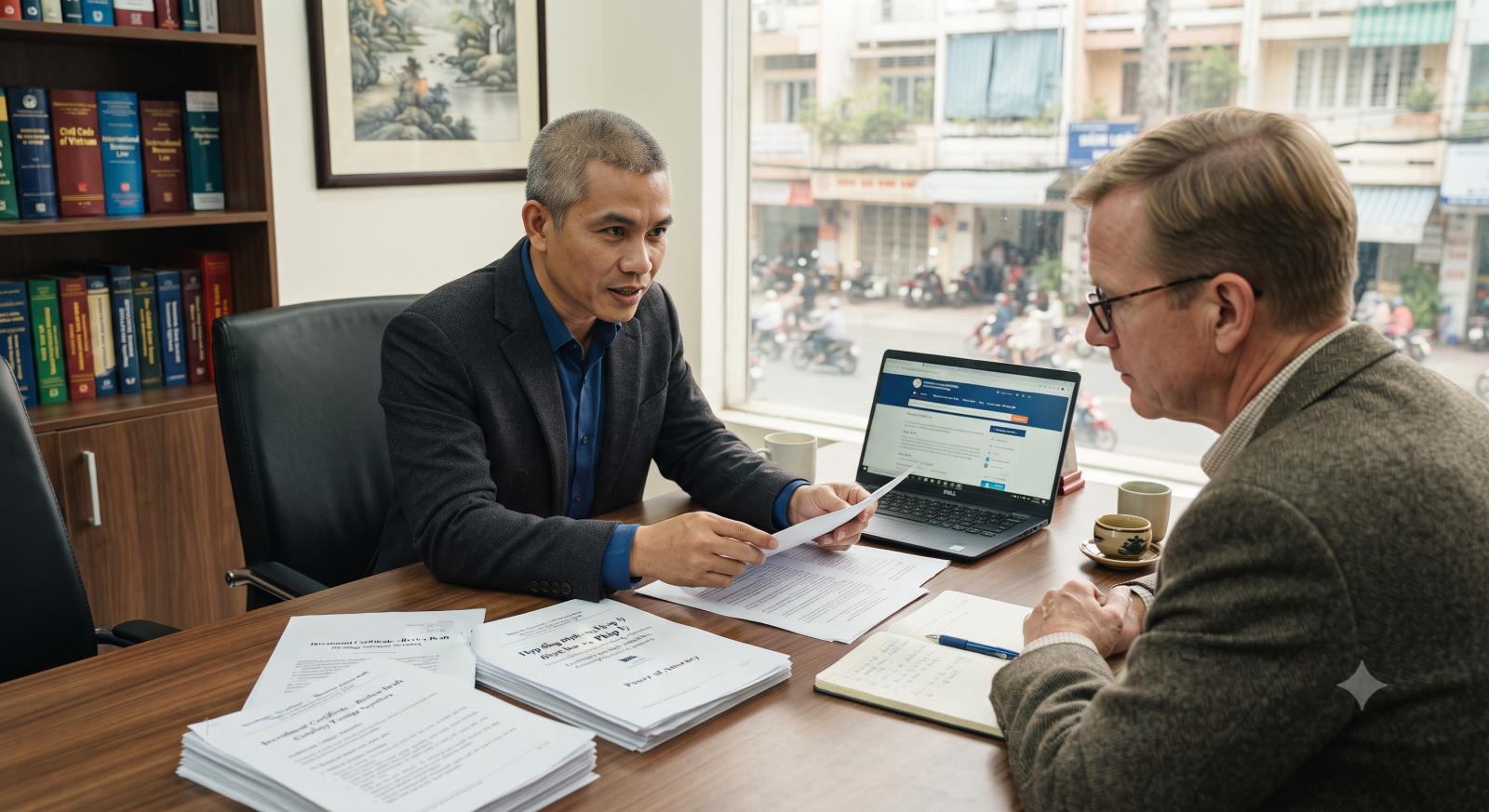
APOLO LAWYERS - Solicitors & Litigators assists foreign clients who have legal matters connected to Vietnam and need practical support from overseas. Depending on the case, Apolo Lawyers can help review documents, assess legal options, prepare legal strategy, communicate with relevant parties, and advise whether remote representation is suitable.
Our support may include:
reviewing contracts, evidence, and case documents;
advising on Vietnamese legal procedures and practical risks;
preparing authorization documents and legal submissions;
supporting negotiation and settlement communication;
coordinating document translation, legalization, or procedural preparation where required;
representing or assisting clients within the permitted legal scope;
providing updates in English for overseas clients.
Remote legal representation should always begin with a careful review of the facts and documents. Some matters can be handled substantially from overseas, while others may require formal documents, additional verification, or physical steps in Vietnam.
If you are outside Vietnam and need legal support for a matter in Vietnam, Apolo Lawyers can review your documents, assess the legal options, and advise whether remote representation is suitable for your case. Contact Apolo Lawyers for an initial assessment before taking legal action.
Address: 108 Tran Dinh Xu Street, Cau Ong Lanh Ward, Ho Chi Minh City, Vietnam
Tel: (+8428) 66.701.709 | (+84) 908.043.086
Email: contact@apolo.com.vn
Hotline: (+84) 903.600.347
Address: 9th/F, Tower K&M Building, 33 Ung Van Khiem St., Thanh My Tay Ward, HCM City, Vietnam
Tel: (+8428) 35.059.349 | (+84) 908.097.068
Email: contact@apolo.com.vn
Hotline: (+84) 979.48.98.79